
Your needs, this model
Does it fit your priorities?
What makes the Recycled GRID 1.0 different from the regular GRID 1.0?
The manufacturer lists the Recycled edition's foam as 40% EVA, 30% recycled polyethylene and 30% polyolefin elastomers, with a 100% recycled ABS hollow core; its separate claim says up to 80% recycled materials. Both the Recycled and regular GRID 1.0 product pages list a 13 by 5.5 by 5.5-inch roller, a raised GRID pattern, a hollow core and a 300-pound manufacturer-stated limit. The reviewed pages do not establish a measurable difference in comfort, firmness or durability.
Explore this need in the finder →Is the Recycled GRID 1.0 compact, and what is its length?
The manufacturer lists it at 13 inches long, so it meets this guide's compact threshold of 18 inches or shorter. The compact label describes storage and span, not how easy it will feel to use; a short cylinder may require more repositioning across a broad area.
Explore this need in the finder →Does its recycled-material description prove a specific environmental impact?
No. TriggerPoint states that the product is made with up to 80% recycled materials and identifies recycled polyethylene in the foam and recycled ABS in the core. The page does not provide a product-specific recycled percentage calculation, life-cycle comparison, independent verification, or disposal instructions, so those broader impacts remain unknown.
Explore this need in the finder →This is a source-based assessment of TriggerPoint's Recycled GRID 1.0, SKU 10970, not a hands-on review. I checked the US product page, its first-party variant record, and the manufacturer's B2B listing on October 29, 2026. I did not use the roller, test its feel, measure its firmness, or verify its recycled content independently. The official page displays one product variant and lists a 13 x 5.5 x 5.5-inch cylinder. This assessment does not make a price or availability claim; check current terms with the seller.
A compact GRID format with a distinct material listing
At 13 inches long, this model falls in the guide's compact class of 18 inches or shorter. The manufacturer lists a 5.5-inch width and height, which describe the roller's circular cross-section. The short length may help with storage or focused positioning, but offers less uninterrupted span than a 22- or 36-inch format. Confirm it against your own space and routines.
The reason to distinguish the Recycled edition from the regular GRID 1.0 is not a different length or visibly different operating format. The two official product pages list the same dimensions, a three-zone raised GRID pattern, hollow-core construction, and a 300-pound manufacturer-stated support limit. The Recycled page identifies a different material composition: the foam is listed as 40% EVA, 30% recycled polyethylene, and 30% polyolefin elastomers, while the hollow core is listed as 100% recycled acrylonitrile butadiene styrene (ABS). Those are product-specific manufacturer statements, not lab-tested material analysis.
Read the recycled-content claim narrowly
TriggerPoint separately says the product is made with “up to 80% recycled materials.” The page does not explain that calculation, give a measured percentage for this individual unit, or publish independent verification. Do not treat the phrase as an exact unit-level share, a life-cycle advantage, or a recycling guarantee. If a documented percentage or environmental comparison is essential, the public information reviewed here does not settle it.
This is also why the model remains separate from the catalog's regular GRID 1.0 review and from the unresolved Eco GRID entry. The Recycled GRID has its own product title, SKU, product page, and material statement. Similar naming is not sufficient evidence to merge it with a different edition, and this assessment does not assume the Eco GRID has the same composition.
Raised zones are design features, not a pressure rating
The manufacturer describes the three-zone GRID surface as flatter sections, tubular ridges, and denser nodules. That supports classifying the roller as patterned rather than smooth. There is no standardized pressure, durometer, or compression figure in the information reviewed; the maker's comparisons to massage sensations are not a measurement of individual feel.
Its hollow core is another documented design distinction. TriggerPoint says that the construction supports up to 300 pounds. Treat that as a maker-stated limit, not an independent strength or durability result. No repeated-load test was carried out for this assessment, and the page does not publish a standardized firmness measure. Those unknowns matter if a buyer is comparing products based on a precise hardness target or expecting a verified durability ranking.
One manual operating arrangement
The source identifies a foam roller with no motor or powered mode. It lists several body areas, including the back, arms, hips, and legs, but those tags do not establish a technique, duration, injury treatment, or suitability for every person. This guide records one manual rolling arrangement and does not interpret the product's broad promotional claims as clinical evidence. Anyone managing pain, injury, rehabilitation, or a clinician's restriction should follow appropriate professional advice rather than treating product copy as a care plan.
The manufacturer page's care tab contains the text “Clean with mild soad and water.” Because the wording appears misspelled, I have not silently converted it into a confirmed cleaning instruction. The reviewed page also does not supply a warranty duration for this edition. Ask the manufacturer for clarification about care and warranty terms rather than assuming that a separate GRID model's instructions automatically apply.
Variant image and safety-notice limits
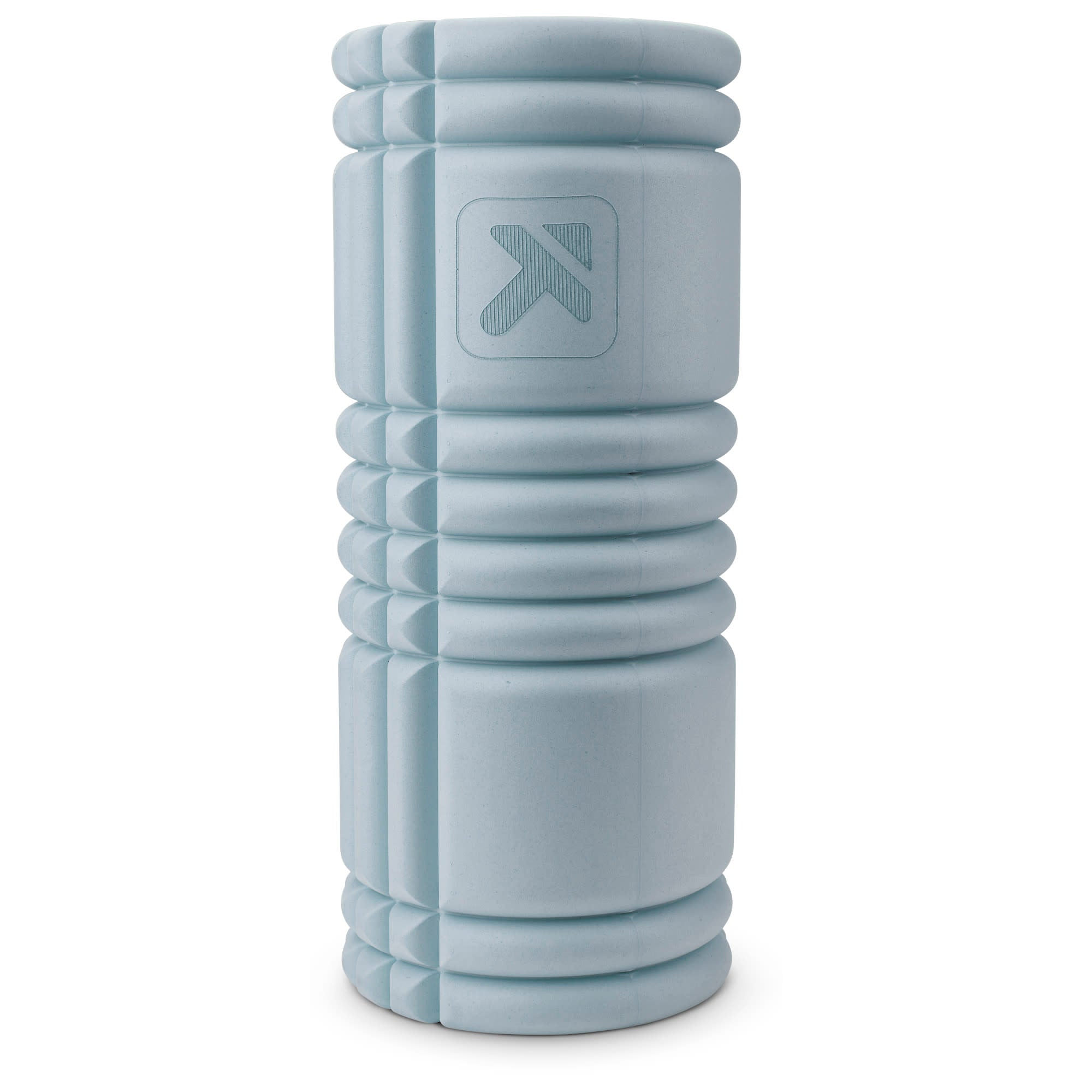
The image shown here is the official product photograph tied to the single SKU 10970 variant record. It shows a pale blue-gray cylinder with the raised GRID pattern and brand mark. The consumer page does not name a finish, so the color is described only by appearance; the photo cannot prove the listed dimensions or material percentages. Check the exact model name and SKU in any offer, especially where similar GRID names appear together.
On October 29, 2026, three bounded CPSC SaferProducts searches for the product name, brand plus product name, and SKU returned empty Recalls XML elements. That is only the result for those search terms at that time. It is not proof that there is no safety notice under a different name, identifier, lot, or later update; check current manufacturer and CPSC information for the exact item.
Who may want to compare it
The documented case for this model is specific: a 13-inch manual roller, raised three-zone surface, hollow core, and a maker-described recycled-material formulation. It may merit comparison if those dimensions and construction details fit your preferences, while the recycled-material claim is a priority you want to investigate. The short span, raised surface, unquantified firmness, and unexplained “up to” calculation are meaningful limits. It does not have a demonstrated performance advantage over the standard GRID 1.0 in the reviewed evidence. Choose based on exact dimensions and verified needs, and seek clearer environmental or care documentation if those are deciding factors.
Key specifications
Key details at a glance
| Length | 13 in |
|---|---|
| Length class | Compact class (18 in or shorter) |
| Diameter | 5.5 in |
| Surface pattern | Three-zone raised GRID pattern |
| Outer material | EVA/PE/POE blend |
| Foam composition | 40% ethylene vinyl acetate (EVA), 30% recycled polyethylene (PE), and 30% polyolefin elastomers (POE), as listed by the manufacturer |
| Core construction | Hollow core |
| Core material | 100% recycled acrylonitrile butadiene styrene (ABS), as listed by the manufacturer |
| Manufacturer's recycled-content claim | Up to 80% (manufacturer claim; calculation not specified) |
| Manufacturer-stated support limit | 300 lb |
| Powered operation | No |
Use the exact model’s instructions for operating limits, supplied equipment and version differences.
Sources for this review
Sources for this assessment
- TriggerPoint Recycled GRID 1.0 Foam Roller — official US product page
- TriggerPoint Recycled GRID 1.0 — official product variant JSON
- Implus B2B — Recycled GRID 1.0 Foam Roller manufacturer listing
- TriggerPoint Rollers — official US collection
- CPSC SaferProducts public recalls API — bounded product-name and SKU queries
Compare the tradeoff against your routine
Use the source-based finder to compare documented size, surface and construction preferences; it does not predict comfort or therapeutic outcomes.