
Your needs, this model
Does it fit your priorities?
Can the 5-inch ball be classed as a compact roller by length?
No length class is assigned. The source specifies a 5-inch spherical diameter, not an overall longitudinal length, so the compact-length rule does not treat diameter as length.
Is the 5.0 ball's surface patterned?
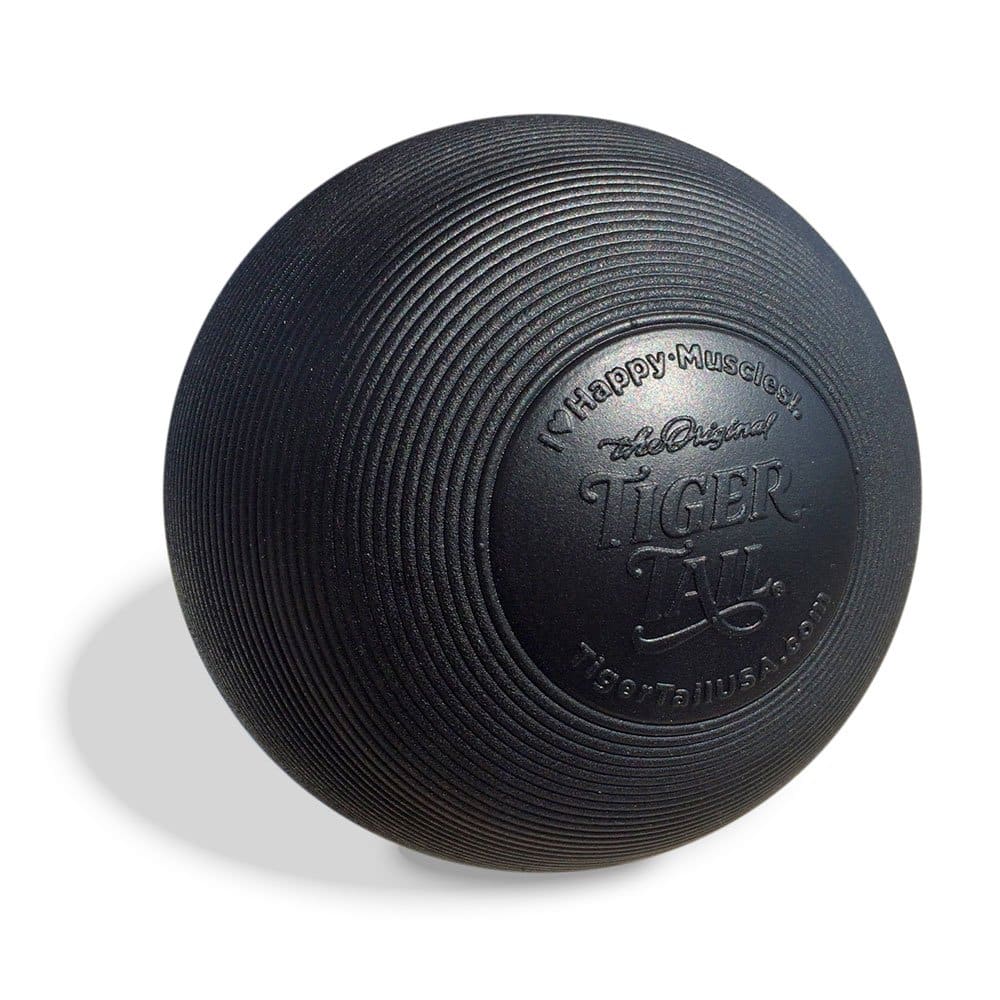
Yes. The exact product image shows concentric ridges and the manufacturer describes a textured ball surface. This is a geometry label, not a pressure or comfort rating.
Explore this need in the finder →Does the page document hollow or solid core construction?
No. EVA foam and shape-retention statements do not classify the internal structure; the core field remains unknown.
The Tiger Ball 5.0 is a single, non-powered foam massage ball. Tiger Tail’s current product page identifies it as SKU 5.0TBRP, gives a 5-inch diameter, lists a weight of 3.2 ounces, and specifies ethylene-vinyl acetate (EVA) foam. The exact manufacturer image shows a spherical ball with close circular ridges. This is a ball-format assessment, not a recommendation for a treatment or a report of personal use.
How the ball changes the rolling task
A sphere concentrates contact into a much smaller moving area than a long cylinder. The maker describes using body weight as leverage and lists floor, chair, bed, and wall as possible surfaces. Those are different operating settings rather than an interchangeable promise of comfort: a wall offers a different amount of body loading than lying on the tool, and the user still controls how much pressure to apply. The source page names larger areas such as hips, hamstrings, glutes, back, neck, and shoulders, but those are the manufacturer’s intended-use claims, not proof of therapeutic benefit.
The 5-inch figure is a diameter, not a longitudinal roller length. For that reason the ball is intentionally left out of the finder’s compact, mid-size, and long length classes. It can match a documented textured-surface preference: the official image shows concentric ridges, and the manufacturer describes a textured ball surface that helps prevent slipping. That surface description does not establish a measured pressure level or a particular sensation. A “firm” or non-flattening claim is also qualitative; the page provides no standardized firmness scale.
Choosing it against nearby formats
The Tiger Ball is the more straightforward choice when a single spherical contact point is preferable to a broad, two-lobed peanut. Tiger Tail’s Peanut 2.4 and Peanut 4.4 each pair two balls with a center groove; the 2.4 page describes a 4.75-inch total tool length, while the larger peanut page describes 4.4-inch lobes and an 8.8-inch total span. Those shapes are not equivalent to the single 5-inch ball even though all are used by rolling. The 5.0 has no center channel, so its fit should be judged by the intended contact area rather than by an assumption that it will straddle a narrow line.
It is also unlike a small, dedicated foot roller such as the Tiger Footsie, whose short ridged barrel is designed to roll under a foot. The Ball 5.0 page emphasizes bigger muscle groups and broad positioning against a wall or another surface. If an exact short axial span is important, the ball’s diameter does not supply a comparable cylinder length; if an unpatterned surface is essential, its circular ridges do not satisfy the finder’s smooth option.
Evidence limits and purchase checks
Tiger Tail describes the ball as retaining its shape under pressure and mentions pressures exceeding 300 pounds. That marketing statement is not a maximum load rating, an independently verified safety limit, or a standardized test result; this assessment does not turn it into one. The page does not specify hollow or solid core construction, so the fact that the outside is EVA foam does not make this a confirmed solid-core match. Core type remains unknown.
The listing includes a one-year warranty statement and basic cleaning suggestions, but current seller terms can change. Before ordering, confirm the exact name and SKU 5.0TBRP, the 5-inch diameter, and that the package is the single ball rather than a differently named Tiger Tail ball or bundle. Check the surface appearance and the manufacturer’s current cleaning, warranty, and return information. The direct Tiger Ball 5.0 product page is the primary source for the size, weight, material, listed positions, and warranty statement discussed here.
Key specifications
Key details at a glance
| Listed product weight | 3.2 oz |
|---|---|
| Diameter | 5 in |
| Surface pattern | Circular ridges |
| Outer material | Ethylene-vinyl acetate (eva) foam |
| Foam composition | Ethylene-vinyl acetate (EVA) foam (manufacturer description) |
| Powered operation | No |
| Warranty | 1 year |
Use the exact model’s instructions for operating limits, supplied equipment and version differences.
Sources for this review
Sources for this assessment

Compare the tradeoff against your routine
Use the source-based finder to compare documented size, surface and construction preferences; it does not predict comfort or therapeutic outcomes.