
Your needs, this model
Does it fit your priorities?
Does Essential One 18 fit the compact length band?
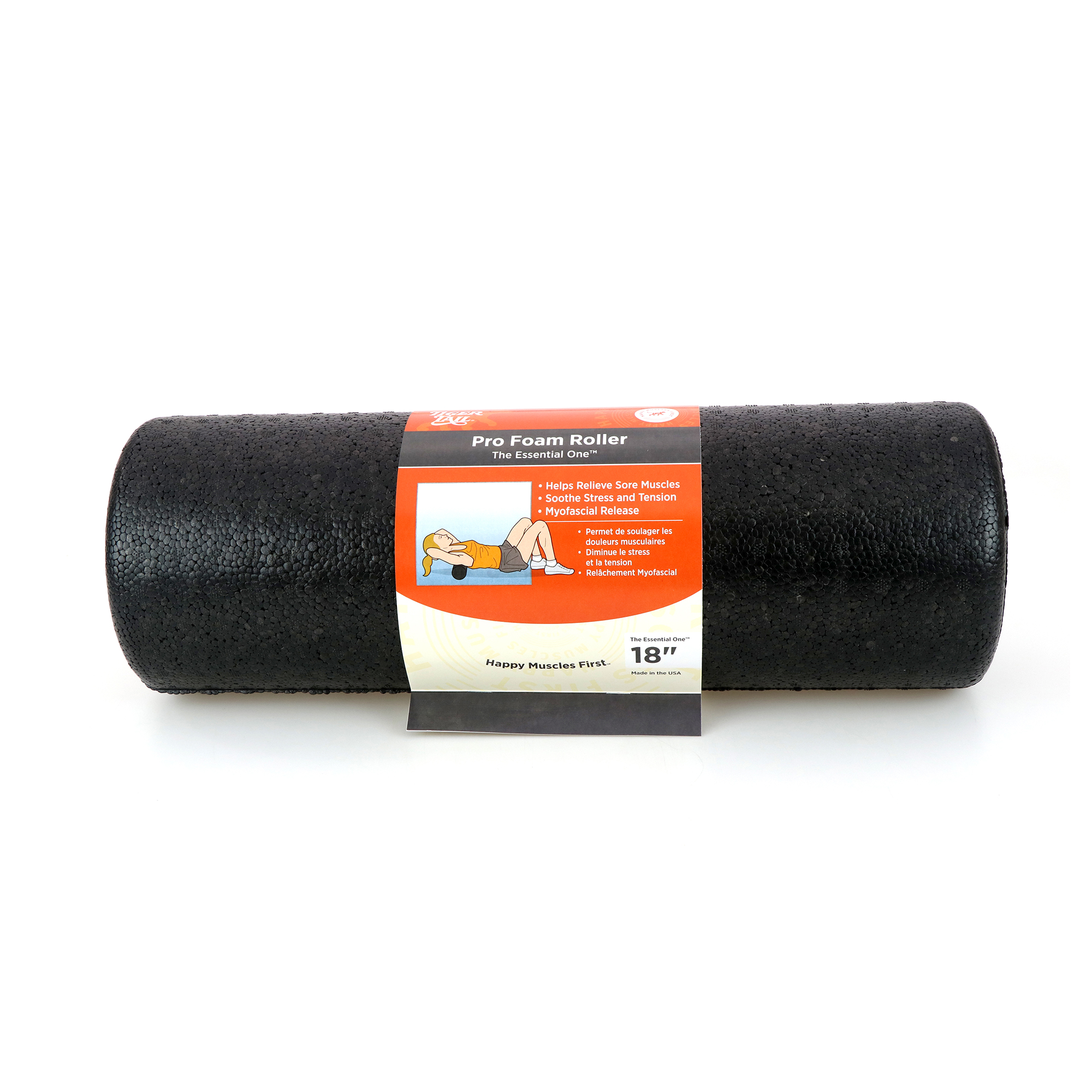
Yes. Its direct page lists an 18-inch length, exactly at the inclusive compact boundary. It is a floor cylinder with a separate six-inch diameter, not an 18-inch handheld stick.
Explore this need in the finder →How is the contact surface categorized?
Tiger Tail describes it as smooth/no deep grooves; the exact product image shows a fine pebbled grain. The finder uses the visible fine pattern category and does not claim a tactile result.
Explore this need in the finder →Is its core hollow or solid?
The product page does not say. Foam material and visible appearance are not enough to meet either hard-core choice.
Explore this need in the finder →Assessment scope: this is a source-based review of Tiger Tail's current Essential One 18 listing and its exact model image, not a hands-on test. The length is the deciding fact: at 18 inches overall, this is the shortest of the three separately listed Essential One cylinders and sits exactly on the compact boundary used by the finder.
Compact does not mean a short rolling center
Tiger Tail lists the 18 at 18 inches long by six inches wide, with the full 18-inch span described as massage surface. That is different from the company's Original 18 handheld stick, where the overall length includes handles and the active center is shorter. The Essential One is a cylinder for floor rolling, so the six-inch figure is its diameter and the full longitudinal body is the relevant span. Its maker-listed weight is 0.55 pound, or 8.8 ounces. These values place it at the upper edge of compact while still offering more uninterrupted contact length than a small massage ball or a hand-held stick's rotating center.
The manufacturer describes 18 inches as its compact and most portable size among the Essential One options. That is a comparative product-page description, not a carry test or a guarantee about a particular suitcase. A compact roller may also be too short for someone who wants a wider continuous platform across the back. The size decision is about the room available for a moving cylinder and the body's positioning, not a statement about the quality of any rolling routine.
Relaxed-pressure claims and what is visible
The product page describes the Essential One foam as dense yet mashable, able to compress around bony areas, and intended to distribute pressure consistently. The wording explains the manufacturer's aim but is not a published density figure, hardness scale or pressure measurement. The page also says the foam holds its shape after heavy use; no independent life-cycle result or controlled test accompanies that statement. I therefore treat “relaxed pressure” as the model-family label and qualitative description rather than a measurable promise that it will feel comfortable for every user.
There is a small but material surface-language issue. Tiger Tail calls the exterior smooth and says it has no deep grooves. The exact 18-inch product image nevertheless shows a continuous fine pebbled grain across the cylinder. For the finder, I classify the visible fine pattern as textured, while making clear that this visual category does not quantify how the surface feels. It is not a raised-zone design like a roller with large ridges or sculpted channels. If your definition of smooth means “no deep grooves,” the maker's wording may be closer to your intent; if you mean an unpatterned image, the photo gives you a different signal. Neither source settles tactile preference.
Construction and size-family comparison
The page says the roller is made in the United States and lists a three-year warranty. It describes foam construction but does not identify the polymer, exact recipe or a separate internal core. That matters because the finder's hollow and solid choices are hard construction requirements: the roller does not meet either one just because it is a full foam cylinder. Check the current warranty terms and cleaning instructions in the listing; the manufacturer suggests antibacterial gel or gentle soap-and-water washing.
Within the Essential One group, the 24-inch model adds six inches of length while retaining a six-inch diameter, and the 36-inch version is the longest option. The maker says the middle size gives more room for broader shoulders and back, while the 36 permits the whole back to be supported along the spine. Those are the company's intended-use comparisons, not results from independent fit testing. The Big One is a separate compact alternative at 15 by five inches; unlike the Essential One, its direct page explicitly says it has a rigid hollow core. Comparing those two gives a real construction distinction, not just a different length.
Who should consider the 18
Consider this version when storage space matters, the compact end of the category is the priority, and you want a full-length cylinder rather than a ball or short handheld barrel. It has a clear 18-inch size identity and a relatively low listed weight. It is less compelling if the main aim is a longer full-back platform, a measured softness level or a confirmed core type. The page's title and SKU call it Essential One 18, although the product tag says “The Basic One 18”; check that a retailer's label and SKU say TBAORP18 rather than relying on the size name alone.
Before buying, compare the stated 18 × 6-inch dimensions with your floor and storage space, verify SKU TBAORP18, read the current warranty/return terms, and decide how you interpret the maker's smooth wording against the visible fine grain. The point of this assessment is not that one surface or length is universally better: it is that the 18 offers an exact compact cylinder configuration, while its surface feel and internal construction remain less fully documented than its dimensions.
Key specifications
Key details at a glance
| Length | 18 in |
|---|---|
| Length class | Compact class (18 in or shorter) |
| Active rolling surface length | 18 in |
| Listed product weight | 8.8 oz |
| Diameter | 6 in |
| Surface pattern | Fine embossed texture |
| Foam composition | Foam construction; the maker does not name the polymer or exact formulation. |
| Powered operation | No |
| Warranty | 3 year |
Use the exact model’s instructions for operating limits, supplied equipment and version differences.
Sources for this review
Sources for this assessment

Compare the tradeoff against your routine
Use the source-based finder to compare documented size, surface and construction preferences; it does not predict comfort or therapeutic outcomes.