
Your needs, this model
Does it fit your priorities?
What are the SMARTROLLER's listed dimensions?
OPTP lists 36 inches long by 6 inches wide by 4 inches high. The product is a long two-in-one shape, so the 6- and 4-inch measurements are width and height, not a circular diameter.
Explore this need in the finder →What changes between the SMARTROLLER's two orientations?
OPTP describes the flatter side down as decreasing movement for balance movements, and the rounder side down as a more dynamic or challenging setup. These are the manufacturer's descriptions, not an independent performance or safety test.
Explore this need in the finder →Does SMR36 include the SMARTROLLER guidebook?
The standalone offer is SKU SMR36. OPTP separately lists SMRPKG as a guide-plus-roller package and 8691-2 as the book-only option; check the exact package selector so the offer matches whether you want the guide.
Explore this need in the finder →The standalone SMARTROLLER is OPTP’s asymmetric, two-in-one foam roller, catalog SKU SMR36. Its listed dimensions are 36 inches long by 6 inches wide by 4 inches high. The maker describes a flatter side and a rounder side: flatter side down is presented as decreasing movement for balance work, while rounder side down is presented as a more dynamic setup. Those orientations belong to one physical roller, not two lengths or two interchangeable SKUs.
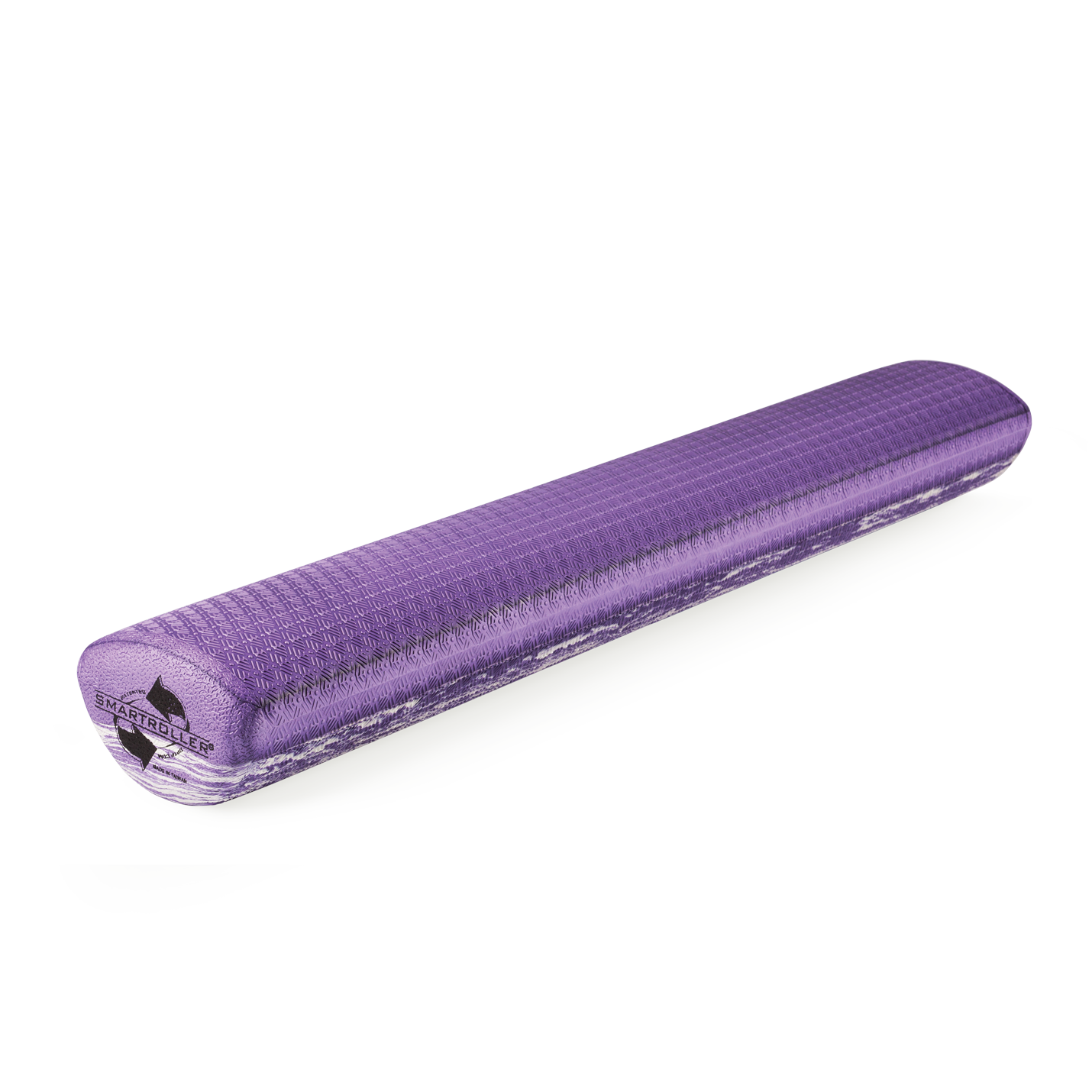
Its 36-inch length is not a 6-inch diameter
SMR36 is long under the finder’s 26-inch-or-more definition. But its other two measurements are width and height, not diameter: the cross section combines a flatter face with a rounder side. That matters when comparing it with a conventional cylindrical roller or measuring shelf clearance. The official description calls it standard size, while its exact dimensions are 36 x 6 x 4 inches. Treat those as the published item dimensions, not as a circular cylinder specification.
OPTP describes both orientations as useful for different movement arrangements and lists the roller for exercise contexts including Pilates, yoga, and Feldenkrais. This review reports those as the manufacturer’s description, not as evidence of a balance result, rehabilitation outcome, or safety for any particular person. If those uses are relevant, follow the instructions and seek qualified guidance where appropriate. The product page does not specify a user-level protocol or a measured intensity.
Surface appearance and material evidence
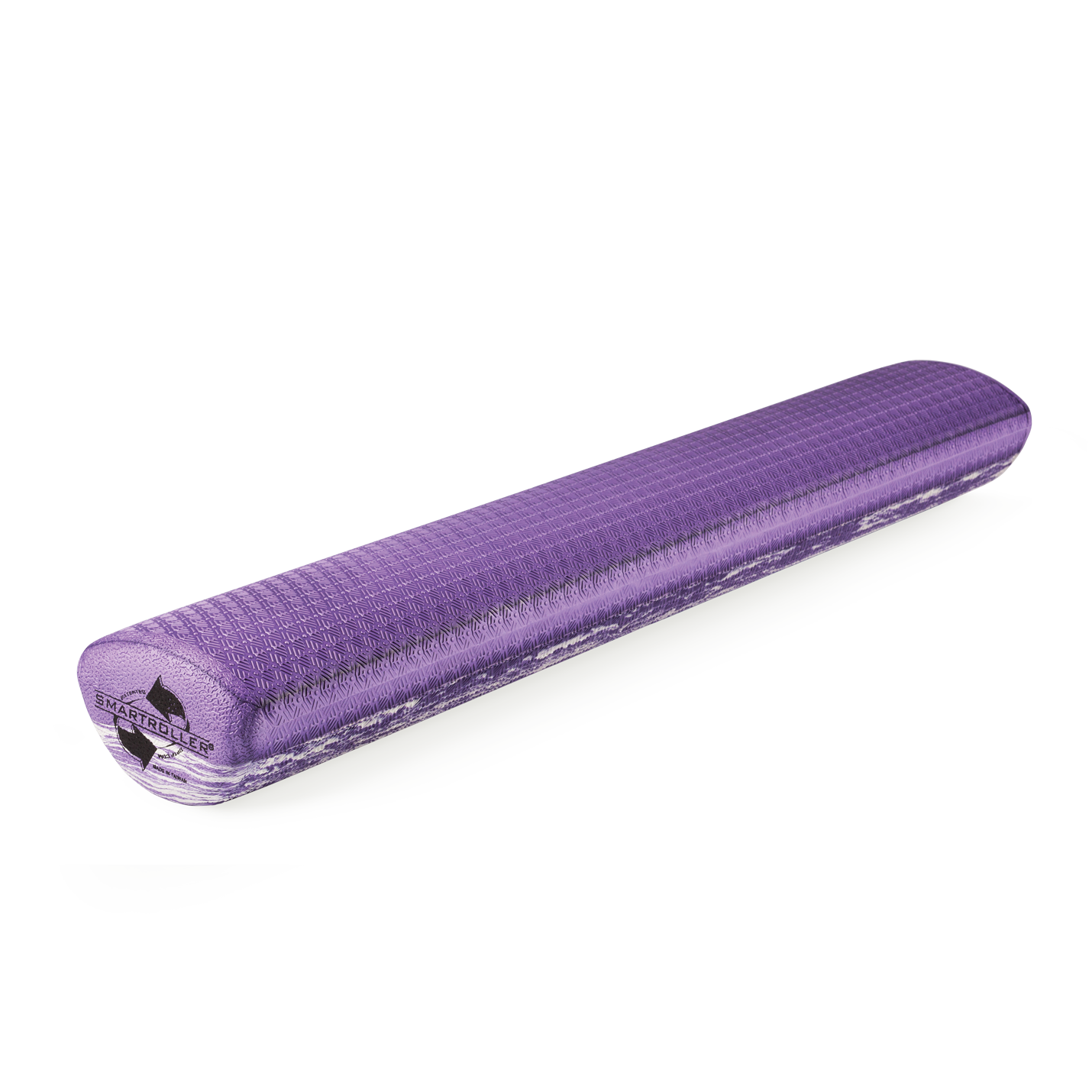
The exact SMR36 image shows a fine geometric embossed pattern across the purple foam exterior. That visible feature supports the finder’s patterned-surface tag. It does not establish a quantified roughness, pressure response, or comfort level. The reviewed product and enrichment pages identify the item as a foam roller but do not provide a separate foam formulation, standardized density or firmness measurement, or an independent comparison with another roller.
Nor do the pages classify the internal core as hollow or solid. A shaped silhouette or embossed exterior cannot settle that question. The materials and core therefore remain unknown here, rather than being inferred from the appearance of a solid-looking image. No hands-on use, compressive load test, durability trial, or clinical evaluation was conducted.
Standalone SMR36 versus the guide package
Check the package selector carefully. SMR36 is the standalone roller-only listing. The separate SMRPKG offer pairs a SMARTROLLER with the second-edition Guide to Optimal Movement; the guide-only SKU 8691-2 does not include a roller. The guide package review explains that distinction, but this assessment is specifically about the standalone roller. If you want the booklet’s instructions, verify the exact package name and SKU rather than relying on a shared product photo or the word “SMARTROLLER.”
A 36-inch design may be less convenient to store than shorter roller formats. Compare it with the published compact Lo Rox travel roller or with other long cylinders only after accounting for shape: a flat face and rounder side are a different cross section from a full round roller. OPTP does not provide a package footprint or weight on the reviewed page, and this review does not infer either from the image.
What remains unreported
The manufacturer pages reviewed establish the standalone model identity, size, two orientations, and pictured surface pattern, but leave core type, foam formula, standardized firmness, care, weight, and a load rating unconfirmed. Do not translate a qualitative use description into a product test or a recommendation for a medical condition. Check the current instructions and seller’s exact return terms, and confirm whether the offer is SMR36 or SMRPKG.
The SMARTROLLER guide package is the nearest package comparison; it contains the same described roller together with the second-edition booklet, rather than a different roller length. The long, patterned finder view includes SMR36 from its 36-inch length and the exact standalone image’s embossed pattern. That match does not certify compatibility or predict a personal response.
Key specifications
Key details at a glance
| Length | 36 in |
|---|---|
| Length class | Long class (26 in or more) |
| Surface pattern | Fine embossed texture |
| Outer material | The exact official standalone smr36 image shows a fine geometric embossed contact pattern on the foam roller. the reviewed product and enrichment pages do not state a separate foam formulation or quantify texture; this is a visual pattern tag, not a pressure or comfort measurement. |
| Powered operation | No |
Use the exact model’s instructions for operating limits, supplied equipment and version differences.
Sources for this review
Sources for this assessment
- OPTP U.S. Foam Rollers catalog card, SMARTROLLER SKU SMR36
- OPTP SMARTROLLER standalone U.S. product page, SKU SMR36
- OPTP SMARTROLLER dimensions, two-sided design and described use
- OPTP SMARTROLLER guide page distinguishing SMRPKG and book-only SKUs
- OPTP exact standalone roller image keyed to SKU SMR36
- CPSC bounded SMARTROLLER product-name recall query
Compare the tradeoff against your routine
Use the source-based finder to compare documented size, surface and construction preferences; it does not predict comfort or therapeutic outcomes.